


How to Clean Wood Furniture: Safe Steps for Each Finish
Chris Martin Date: Hearthside Furniture Editorial Process
To clean most sealed wood furniture, remove loose dust, wipe gently with a barely damp cloth and a mild cleaning solution approved for the finish, then dry immediately. Always check the manufacturer’s care instructions and test a hidden area before cleaning the entire piece.
The finish matters more than the wood species when choosing a cleaning method. A sealed dining table, an oiled cabinet, and an antique dresser may need different care even when they are made from the same wood.
Before You Start, Check the Furniture’s Finish
Look for care instructions on the manufacturer’s website, your purchase paperwork, or a label underneath the furniture. Appearance alone does not reliably identify a finish.
Use the following table as a starting point, then follow the instructions for your particular piece.
| Furniture surface | Where to start | Main precaution |
|---|---|---|
| Sealed or varnished wood | Soft cloth; a barely damp wipe or approved cleaner when needed | Keep moisture away from seams and damaged areas |
| Painted wood | Gentle dusting and a manufacturer-approved cleaning method | Avoid scrubbing chipped paint or exposed edges |
| Oiled wood | Dusting and products recommended for the specific oil finish | Do not substitute a general furniture polish |
| Waxed wood | Gentle dusting and finish-specific care | Some cleaners can disturb the wax layer |
| Wood veneer | Clean according to its surface finish | Avoid excess moisture, particularly at edges |
| Raw or unfinished wood | Dry dusting with a soft cloth or brush | Liquids may soak in and leave marks |
| Antique or unknown finish | Gentle dry dusting while you seek care advice | Avoid experimenting with cleaners or restoration products |
If the finish is peeling, cracked, or unusually sticky, stop before using a wet cleaning method. Cleaning cannot repair a failing finish, and stronger products may make the damage worse.
What Do You Need to Clean Wood Furniture?
For routine care, gather:
-
Two or three clean, soft, lint-free cloths.
-
A soft brush for carved details and corners.
-
A small bowl of lukewarm water, if permitted by the care instructions.
-
Mild dish soap or a cleaner approved for the furniture’s finish.
-
A separate dry cloth for removing moisture.
Keep abrasive sponges, stiff brushes, and rough paper towels away from delicate surfaces. Make sure your cloths are free of grit before using them.
You can also explore Hearthside's complete collection of furniture care products for cleaning, polishing, and light furniture touch-ups.
Everyday Cleaner for Finished Wood
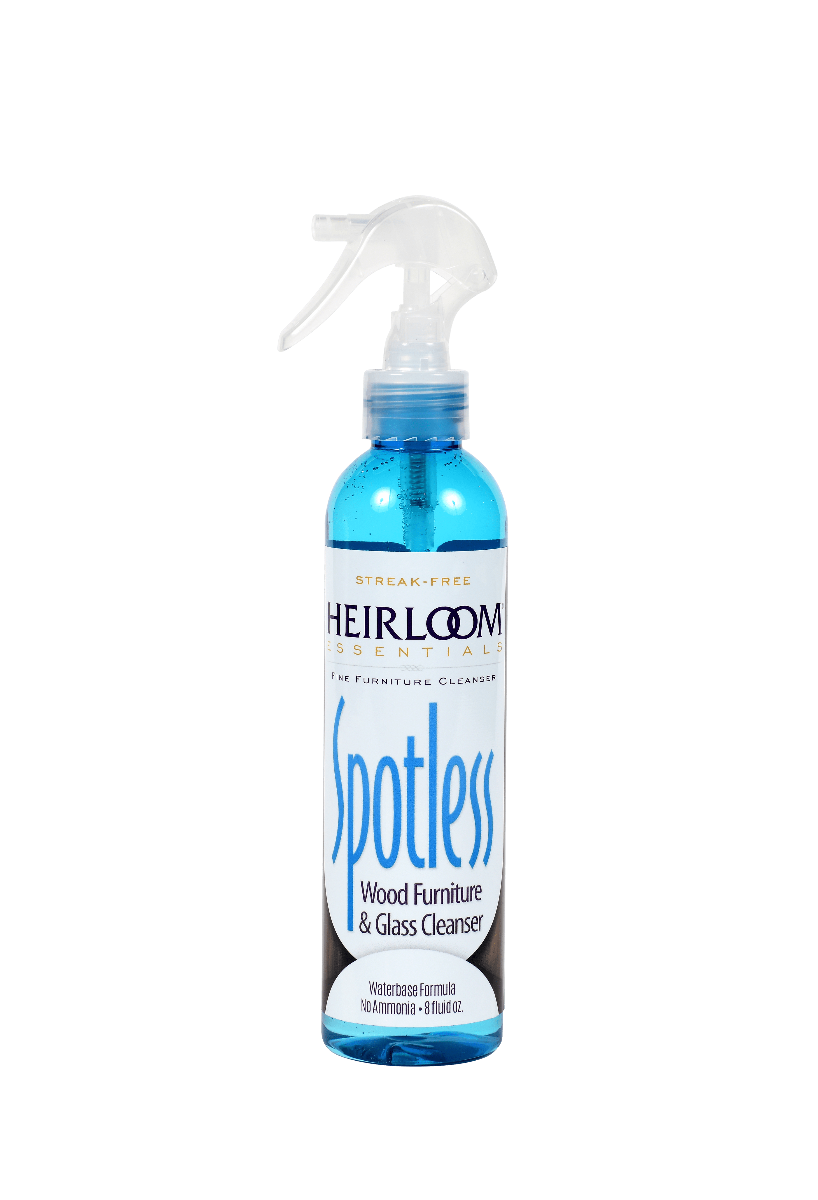
Heirloom Essentials Spotless Furniture & Glass Cleanser
Looking for a convenient option for routine furniture cleaning? This cleanser is a useful choice for compatible finished wood surfaces when used according to the product directions.
How to Clean Wood Furniture: Step-by-Step
1. Remove Loose Dust and Debris
Clear the surface, then gently remove dust, crumbs, and loose particles with a soft cloth.
Use a soft brush around carved details, handles, and joints. Avoid pressing dirt into the surface or dragging crumbs across it.
For furniture that is only dusty, this may be all the cleaning it needs.
2. Choose a Suitable Cleaning Solution
If the manufacturer permits soap and water, mix a small amount of mild dish soap into lukewarm water. Avoid a strong or heavily sudsy mixture.
Alternatively, use a cleaner specifically approved for your finish. Follow the label rather than combining it with soap, vinegar, or another product.
3. Test an Inconspicuous Area
Apply the chosen method to a small hidden area, such as the underside of a table edge. Let it dry and inspect it before continuing.
Stop if you notice:
-
A change in color or sheen.
-
Cloudiness or whitening.
-
A softened or tacky surface.
-
Finish transferring onto the cloth.
A successful spot test reduces risk, but it does not make a cleaner suitable for every surface.
4. Wipe With a Barely Damp Cloth
Wring the cloth out thoroughly. It should leave very little moisture behind.
Wipe gently with the grain where practical, working in small sections. If using a spray cleaner, apply it to the cloth as directed rather than saturating the furniture.
Pay particular attention to joints, veneer edges, and areas where the finish is worn.
5. Remove Residue and Dry Immediately
If the soap or cleaner instructions require removing residue, use a second barely damp cloth. Follow immediately with a clean, dry cloth.
Do not leave droplets or wet patches on the surface. Check around hardware and along edges where moisture can collect.
6. Polish Only When Recommended
Cleaning and polishing serve different purposes. A clean surface does not automatically need polish.
Some finishes require specific waxes or oils; others need no additional product. Follow the furniture manufacturer’s recommendations, and apply any compatible polish sparingly to a clean, dry surface.
Give Finished Wood an Occasional Refresh
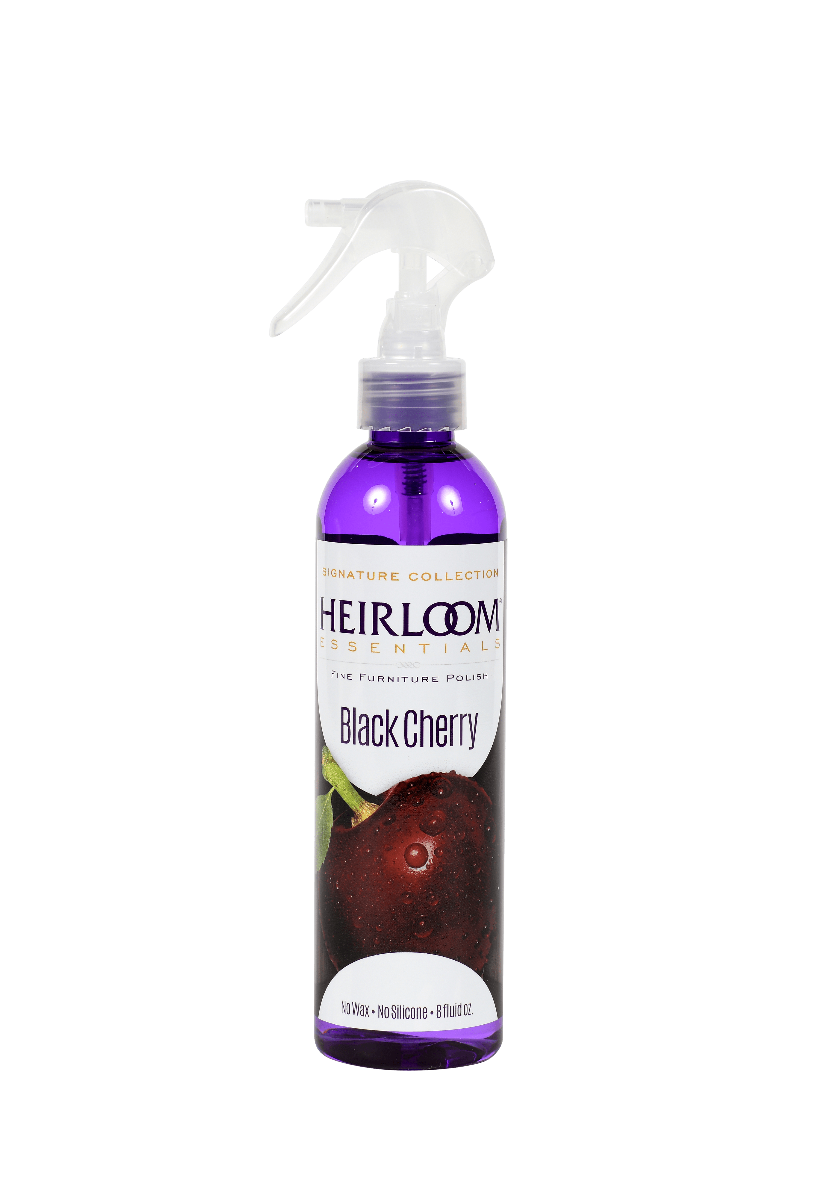
Heirloom Essentials Fine Furniture Polish
If your furniture is already clean but the compatible finished surface could use an occasional polish, this is a natural next step in your furniture-care routine.
How to Clean Dirty Wood Furniture and Remove Grime
Furniture used daily can collect fingerprints, cooking grease, food residue, and layers of cleaning products. Start gently rather than reaching for a stronger cleaner immediately.
For sealed wood with an intact finish:
- Remove loose dust and particles.
- Spot-test an approved cleaning method.
- Wipe a small area with a barely damp cloth.
- Change to a clean section of the cloth as it picks up dirt.
- Remove any cleaner residue as directed.
- Dry the area before moving on.
A second gentle pass may help with remaining surface dirt. Avoid prolonged rubbing or leaving the cleaner on longer than directed.
If a dark patch or sticky area remains, it may be a stain, old wax, polish buildup, or deterioration of the finish. These problems need different treatments. Identify the cause before escalating.
How to Remove Sticky Residue From Wood Furniture
First, consider what caused the stickiness.
Fresh food residue on a sealed table may respond to the routine cleaning method above. Adhesive from a label, accumulated polish, and a softening finish require different approaches.
Avoid scraping with a blade or abrasive pad. Do not add polish over a sticky surface.
For persistent residue, ask the manufacturer which remover is compatible with the finish. If the surface itself feels gummy or comes away on the cloth, stop and consult a furniture repair specialist.
How to Clean Wood Furniture Without Removing the Finish
The goal is to remove dirt while preserving the protective surface underneath.
To reduce the risk of stripping or dulling the finish:
- Use the mildest approved cleaning method.
- Test before treating a visible area.
- Keep the cloth barely damp.
- Work in small sections and dry promptly.
- Avoid abrasive powders and scouring pads.
- Do not use solvents or restoration products without confirming compatibility.
- Stop when the finish changes appearance or texture.
Scrubbing harder is not a reliable way to remove a stubborn mark. Once ordinary cleaning stops helping, reassess the problem.
How to Clean a Wood Dining Table
Dining tables need frequent attention because food, drinks, and fingerprints accumulate quickly.
After meals, clear the table and remove crumbs with a soft cloth. Blot spills promptly, then use the manufacturer-approved cleaning method if residue remains. Dry the surface afterward.
For greasy spots on compatible sealed finishes, a mild soap solution may help. Use minimal moisture and avoid letting liquid collect around extension leaves, joints, or decorative edges.
Do not soak dried food. Gently clean it in short passes rather than scraping or leaving a wet cloth on the table.
Use coasters and trivets to reduce contact with drinks and hot serving dishes. Check beneath placemats occasionally for trapped moisture or debris.
How to Clean Old and Antique Wood Furniture
Older furniture may have fragile finishes, previous repairs, or several layers of wax and polish. Begin with careful dry dusting.
If you know the finish and it is intact, follow its recommended cleaning method after spot-testing. If the finish is unknown, flaking, or tacky, seek advice before applying liquids.
For valuable antiques, avoid experimenting with vinegar mixtures, solvents, cooking oils, or general restoration products. Preserving the original surface may be more important than removing every mark.
Cleaning can improve the appearance of surface dirt, but it will not necessarily remove deep stains, repair scratches, or restore a worn finish.
Can You Clean Old Wood Furniture Naturally?
If you want to avoid unnecessary cleaning products, start with a soft cloth and gentle dusting. Where the finish allows it, a barely damp cloth may be sufficient for light dirt.
“Natural” ingredients are not automatically suitable for furniture. Vinegar, lemon juice, and household oils should not replace finish-specific care instructions.
How to Choose the Best Cleaner for Wood Furniture
The best cleaner for wood furniture is one compatible with its finish and the type of residue you need to remove.
Before buying, check:
- Whether it is intended for sealed, oiled, waxed, or unfinished wood.
- Whether it is a cleaner, polish, conditioner, or restoration treatment.
- How it should be applied and removed.
- Whether the furniture manufacturer recommends or permits it.
For compatible sealed furniture, Hearthside offers Heirloom Essentials Spotless Furniture & Glass Cleanser. Its water-based formula contains no wax, silicone, or ammonia. Follow the product directions and avoid using it on raw, unfinished, or unsealed wood.
If your furniture’s care instructions permit polish, explore Heirloom Essentials Fine Furniture Polish. Confirm compatibility before applying it.
You can also browse Hearthside’s Furniture Care collection to compare options.
Can You Clean Wood Furniture With Vinegar?
Do not use vinegar as a universal wood cleaner. Recommendations differ by finish, and a mixture suitable for one surface may damage another.
Unless the furniture manufacturer specifically approves vinegar, choose the recommended cleaner instead. Avoid experimenting with it on unfinished wood, delicate antiques, or damaged finishes.
The same caution applies to homemade mixtures containing lemon juice, baking soda, or cooking oil.
What About Water Rings, Heat Marks, and Scratches?
These are damage or restoration issues rather than routine cleaning tasks.
Blot fresh moisture and dry the surface. If a ring remains, check the manufacturer’s guidance before attempting a treatment. White marks, dark stains, and heat damage may require different repairs.
Avoid treating an unfamiliar finish with toothpaste, abrasive pastes, an iron, or a hair dryer. Such methods can alter the surface.
For scratches, a manufacturer-approved touch-up product may help disguise minor damage. Deep scratches, lifted veneer, swelling, or persistent stains are better assessed by a repair professional.
Kramer's Best Antique Improver
Looking after an older or antique piece? Choose products intended for this type of furniture rather than automatically using the same cleaner you use on newer finished surfaces.
How Often Should You Clean Wood Furniture?
Clean according to use rather than a fixed polishing schedule.
|
Task |
Practical routine |
|
Remove spills |
Promptly |
|
Clear dining-table crumbs |
After meals |
|
Dust |
Regularly, before visible buildup accumulates |
|
Clean fingerprints or grease |
As needed, using an approved method |
|
Polish, wax, or oil |
Only according to the finish’s care instructions |
Regular gentle care helps prevent dirt from accumulating without repeatedly exposing furniture to moisture or cleaning products.
Common Wood Furniture Cleaning Mistakes
Avoid these habits:
- Using a soaking-wet cloth.
- Spraying excessive cleaner directly onto the surface.
- Scrubbing with abrasive pads.
- Mixing cleaning products.
- Applying polish over dirt or sticky residue.
- Assuming all wood finishes need oil or wax.
- Treating veneer edges with excess moisture.
- Using stronger chemicals without identifying the stain.
- Continuing after the finish changes color, sheen, or texture.
Keep furniture away from concentrated heat where possible, protect it from prolonged direct sunlight, and follow the manufacturer’s placement and care guidance.
Keep Wood Furniture Clean With the Right Care
Start with the finish, remove dust gently, and use only as much cleaner and moisture as the surface needs. Dry promptly and stop if the finish reacts.
For furniture-care products, browse Hearthside’s Furniture Care collection. If you are unsure which product suits your piece, contact Hearthside Furniture before applying a new treatment.


